
Significance and Application of Movement Data
🧠 Why Movement Tells a Bigger Story
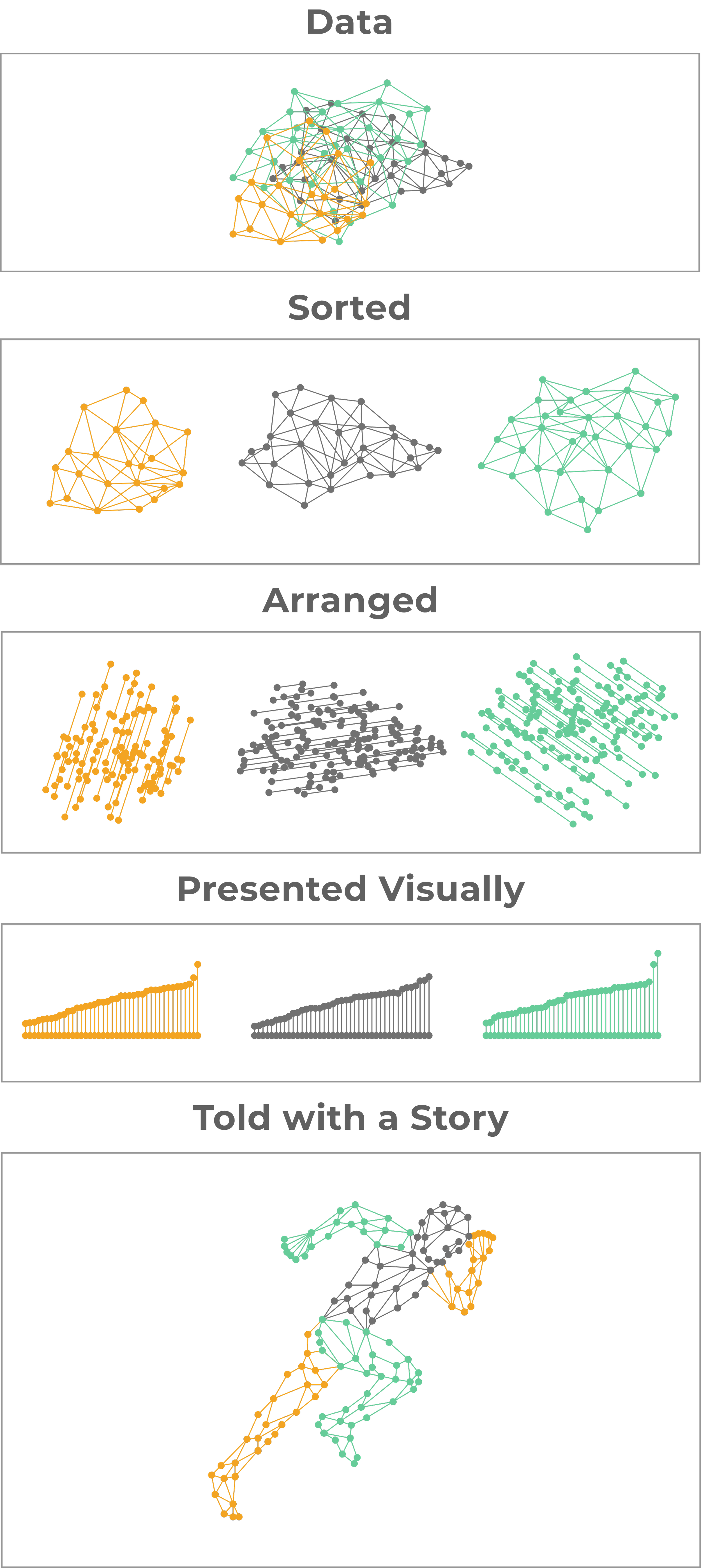
The way a human being moves reveals a great deal about who they are and provides valuable insights into their health and performance status.
At Plantiga, we understand that movement is much more than simple motion—it represents meaningful information. It tells a unique story about each individual. A movement signature serves as a dynamic, living baseline that evolves over time according to an individual’s season, position, and workload. This baseline allows us to detect subtle deviations from normal movement patterns before any issues or injuries arise.
Importantly, because this data is collected passively during real training sessions and live games—not just controlled lab tests—it offers an authentic and comprehensive picture of how that person actually moves under real-world load conditions. This information, in turn, supports smarter training protocols, safer return-to-play decisions, and better day-to-day management of athletes and individuals.
🔬 What is a Movement Signature?
When we talk about movement signatures, we’re referring to a unique profile of how someone moves—how they walk, how they run, how they jump, how they change direction.
It’s dynamic. It evolves. A movement signature captures a moment in time, and we can use that to establish a baseline. From there, we monitor for deviations—subtle or dramatic—that might tell us something about changes in health, fatigue, injury risk, or recovery.
Check out the progression of a walking movement signature throughout part of a rehab journey, where the grey shape is week 1 and the blue shape is each week relative to week 1:

📈 Movement Maps and Variability
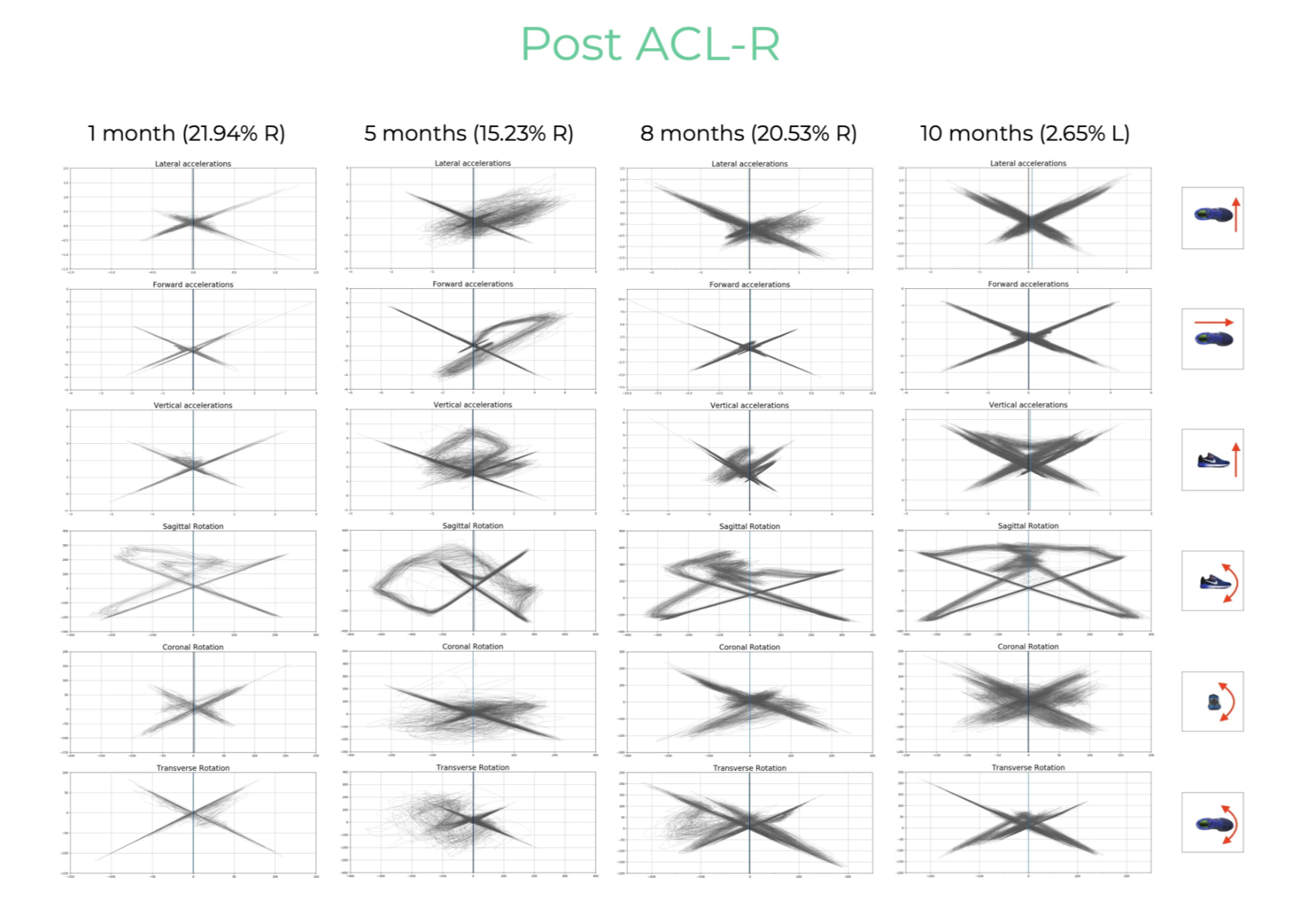
One of the tools we’ve developed to support this work is something we call movement maps. These charts visualize and trace each gait cycle from a walk or run across all six axes of acceleration and rotation.
This gives us a rich, multi-dimensional picture of not only how symmetrical someone’s movement is, but also how variable it is. And variability is a big deal. Too little variability can indicate an inability to adapt to surroundings, and too much variability can indicate a lack of control. It’s a measure that will change within a rehab and throughout a lifetime. We could probably write a whole book about variability, but we will save it for another post 😉
🧠 Why this Matters in Practice
For sports medicine professionals, access to this level of individualized biomechanical insight enables:
Early identification of increased injury risk before symptoms emerge
Data-informed return-to-play progression, benchmarked against personal baselines
Monitoring of neuromuscular readiness and recovery throughout full seasons
Support for collaborative decision-making across performance, therapy, and coaching teams
Rather than relying on periodic testing or subjective feedback, movement signatures provide a continuous, objective stream of data to guide strategy and intervention.
🧩 What We’re Starting to See in the Data
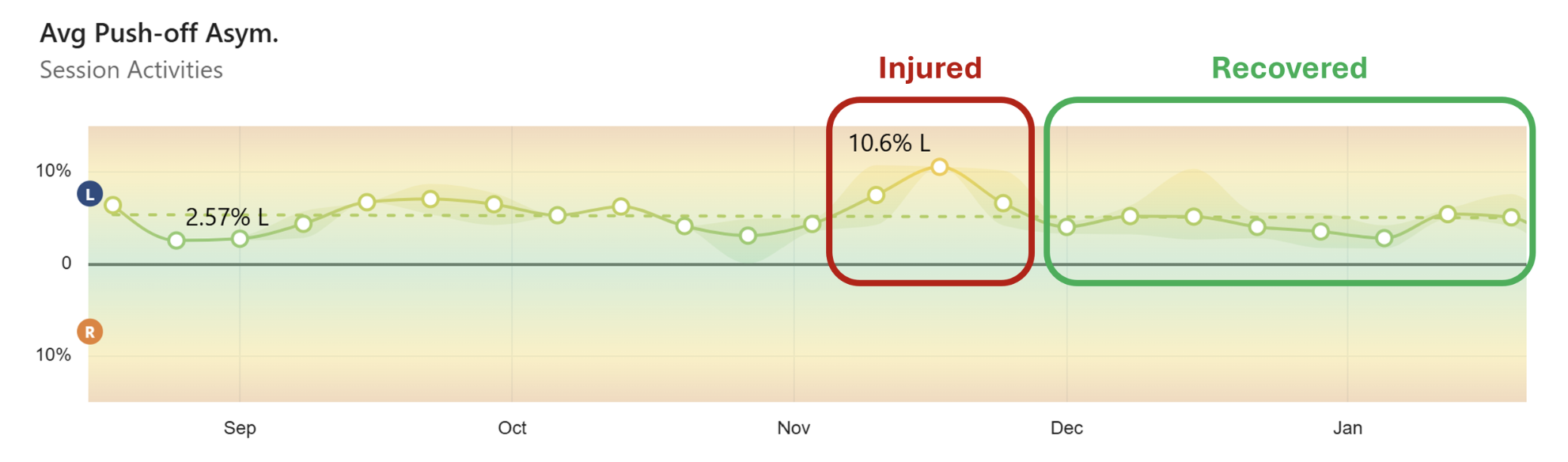
We’re starting to see patterns—real similarities in the movement signatures of different types of injuries. For example, knee injuries tend to be reflected in Impact Asymmetries and Achilles injuries tend to be reflected in Push-off Asymmetries.
There are clear differences in the movement signatures of people who are injured and those who are not. These are early signals, but they’re consistent, and we’re pulling them out of our data more and more.
📊 Profiling. Monitoring. Understanding.
Everything comes back to profiling this signature—then monitoring it day to day, week to week, month to month, and year over year.
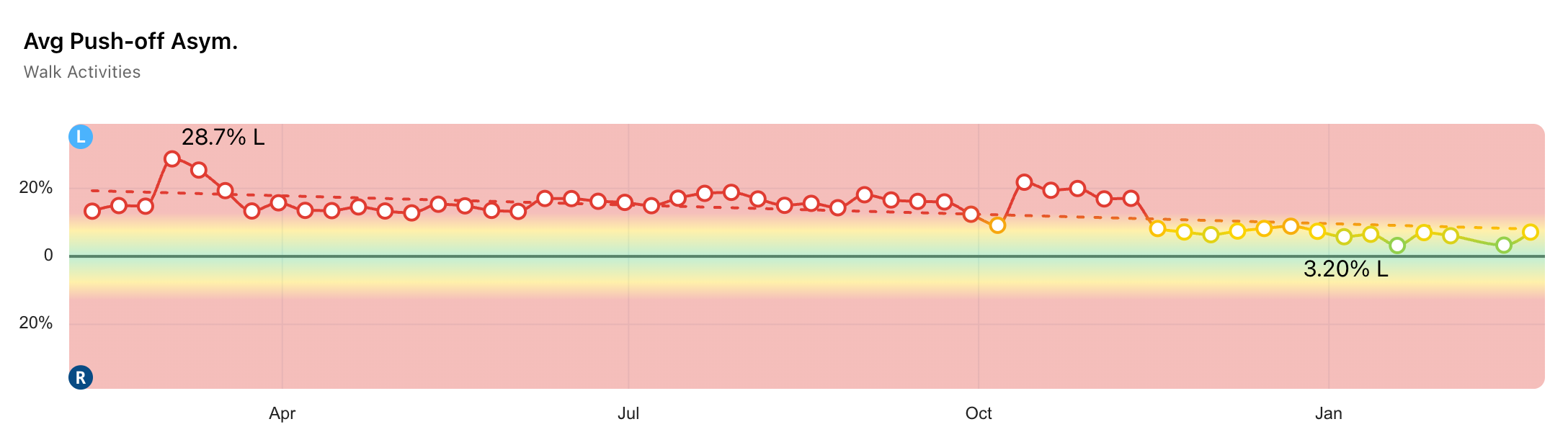
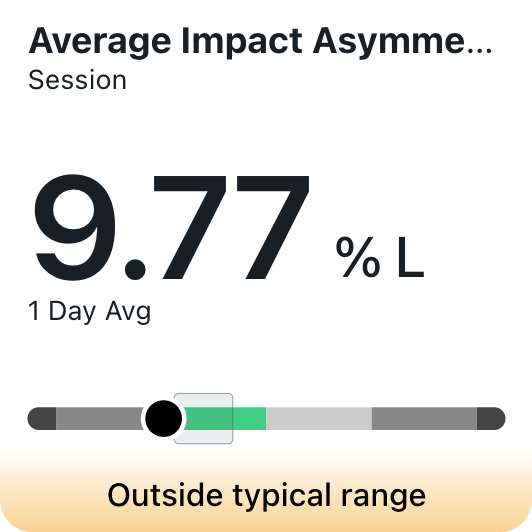
As we build these profiles, the system automatically identifies and flags departures from an athlete’s normal range, allowing us to better understand an individual’s readiness, recovery, and performance and build a clearer picture of human health in ways we haven’t before been able.
🤖 How AI Supports the Building of Movement Signatures
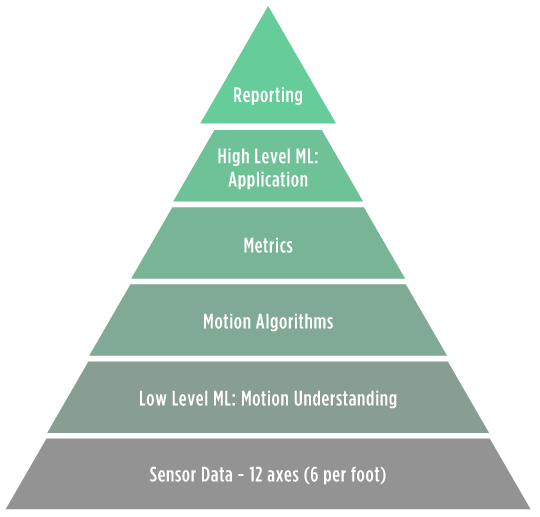
We integrate AI and machine learning throughout the capture and analysis pipeline to enhance both efficiency and accuracy:
Automated activity detection: Classifies movement type (e.g., run vs. walk vs. jump)
Stride segmentation and modelling: Identifies stride patterns and key changes
Metric validation: Improves the reliability of derived biomechanical metrics over time
🏥 Built for Clinical and Performance Environments
Movement signatures are not intended to replace expert evaluation—but to enhance it.
They serve as an ongoing, data-backed lens into each athlete’s physical state, allowing you to:
Triage emerging issues
Prioritize interventions
Validate return-to-play decisions
Individualize monitoring and recovery
In fast-paced environments where availability is everything, a system that objectively monitors movement health in the background is a powerful clinical tool.
🚀 Looking Ahead: Movement Phenotypes & Norman.ai
This work is becoming a core focus of our company. Movement signatures are unlocking new possibilities in health and performance monitoring—and we’re just scratching the surface.
As we keep building and learning, we are starting to see certain traits bubble up based on position, sport, gender, or level of performance. There are differences between how a midfielder moves versus a striker, or between male and female athletes in the same sport. These movement phenotypes, as we like to call them, are just starting to surface—and they’re incredibly promising.
When we look into the future, we see Norman—our AI movement coach. Any time the sensors are being worn, whenever an athlete’s shoes are on, when they are performing, Norman is monitoring their individual movement patterns. Having established their individual movement signature, Norman looks for deviations and recommends programs—exercises and stretches—to address what it sees in the data, and reinforces the work when things improve. Think of it as a co-pilot for the practitioner and a guide for the athlete. A tool to answer questions about movement health, supporting programming, and provide passive monitoring of movement health.
Putting an AI movement coach like Norman in the loop to drive health optimization through movement is where the world is going. While we’re focused on sport right now, this can change lives for people dealing with neurodegenerative or neuromuscular conditions, musculoskeletal issues, concussive mTBI, aging, occupational health and safety—and more.
We’re excited about what we’re building, how we’re evolving our tools, and how this shapes the future of movement intelligence.