
Blog
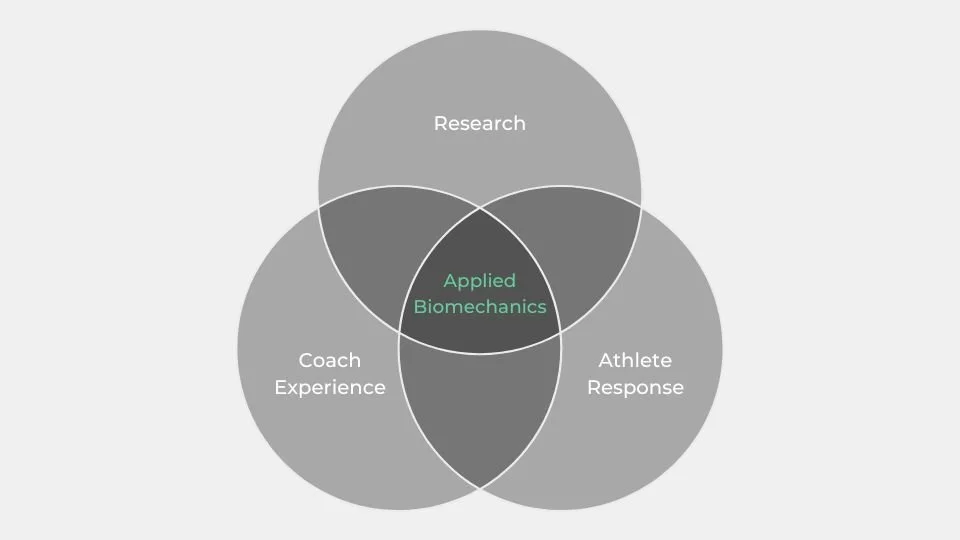
Applied Biomechanics: Building Intuition with Vectors
So how can we actually apply “applied biomechanics”? To start, we must build an intuition around how movement is quantified. There are two basic building blocks: scalars and vectors.

What Asymmetry Testing Really Tells Us: Part 1
The human body does not function as a symmetrical machine. So why do we innately strive for an unachievable standard of symmetry as an indicator of our movement health and performance?
A New Lens on Movement Health - Part 1
The first part of this webinar series focuses on the tools that Plantiga has built into the platform to break out of the mold of conventional movement assessment.

What Asymmetry Testing Really Tells Us: Part 2
Performance asymmetry may not always indicate a deficit. How can you use it to drive performance and injury prevention decision-making?
A New Lens on Movement Health - Part 2
The second part of this series focuses on implementation strategies for using these tools effectively.

What Asymmetry Testing Really Tells Us: Part 3
Determining readiness to return to activity is multifactorial. Here are some actionable guidelines for leveraging asymmetry testing in your practice.
A New Lens on Movement Health - Part 3
The third part of this series highlights various case studies and examples of the Plantiga system in action.

Plantiga for Sport and Return to Play
After 3+ years working with the NBA, NFL, MLB, MLS, the US and Canadian militaries, we are now launching our Plantiga platform for Sports Performance and Injury.

Jump Training and Monitoring for Triathletes
Research strongly supports the benefits of adding strength and power training to programs for endurance athletes.
Sherlock Holmes, Heuristics, and the RTS Road Map: Part I
To make injury prediction a feasible endeavor, we need to study the athlete in their environment like it is a complex-adaptive system (because it is).

Sherlock Holmes, Heuristics, and the RTS Road Map: Part II
We all want to focus on the positive, but sometimes, putting too much faith in our ideas and beliefs leads us to miss the deficits that an athlete is presenting right in front of us.
Sherlock Holmes, Heuristics, and the RTS Roadmap: Part III
Rehabilitation goals shouldn’t be limited to just treating symptoms. We need to prepare athletes physically and mentally for the sport-specific demands they will encounter after they return from injury.

Sherlock Holmes, Heuristics, AI, and Plantiga: Part IV
How you can move beyond the “eye test” and Matt Jordan’s favourite rehab metrics for ACL recovery.
The Reactive Strength Index (RSI)
Reactive strength is a key strength and power ability driving athletic performance. Learn how to use it to train peak performance.
Movement Baselines: Understanding Your Starting Point
A movement baseline is a series of activity-specific assessments that, when analyzed together, provide a snapshot of your movement patterns. Baselines are the foundation for performance, monitoring, and recovery plans.

Return-to-Play Decision Making after ACL-R
Addition of jump tests to assess quality of movement to inform RTP decisions

Plantiga from a Practitioner’s Perspective
Learn how Isabel Aldrich-Witt, Physiotherapist at Canadian Sport Institute Calgary, uses Plantiga in her work with athletes with knee injuries.

Why Do We Run?
In 2017, a reported 60 million Americans actively participated in regular, run-focused activities. With the exception of a few social and migratory animals, this seems to be a uniquely human pastime. Why is that?

Walking: the 6th Vital Sign
The simple act of walking may seem trivial, but it is one of the most valuable steps we can take for our health (pun intended).

Why does movement matter?
Physical movement drives our health in many ways, yet it’s something we often take for granted. Understanding this relationship is the first step to improving and maintaining our ability to move.